Within this article I continue sharing my R&D experience based on the projects I was engaged in. This time we take a closer look to an innovation initiative combining multiple technologies, including GenAI and embedded, and discuss the hot topic of Responsible AI.
In this material I will highlight the key factors that heat up the importance of Responsible AI, the definition of Responsible AI by the main BigTech players and their approach to building the framework. The article could be helpful to Product Managers and Engineers who build AI-powered solutions and need the guidelines to approach Responsible AI as well as understanding how to embed it into their development process.
The original article was published on DOU.
Intro
With the further expansion of AI-based solutions, the risks and stakeholder concerns grow. According to the newest Artificial Intelligence Index Report 2025 published by Standford University, the global AI-optimism in the highly developed countries remains low: Canada (40%), US (39%), The Netherlands (36%). For comparison, China and Indonesia both have above 80%.
Among the main reasons, the report defines:
Economical — companies usually invest in AI more than gain financial benefits
Technical — AI models get better, cheaper and faster, but old “diseases” are still present: preconceptions, hallucinations, low transparency in decisions made, problems with complex reasoning. Also the amount of public data for training the model is limited, which results in model inaccuracy
Ecological — AI model training causes increase in CO2 emissions
Ethical — AI is integrated into people’s daily lives, but trust to AI-based solutions decreases, including due to unethical use of models, such as elections manipulations in different countries
Safety — cybersecurity, private data protection, intellectual property protection etc. remain challenging
Technology can be blamed as much as you want, but most of the problems are related to the fact that AI industry is still a wild field with unlimited possibilities, with its own price — high risks. But what is true for any system, status quo cannot last forever. Thus, the negative consequences provoked the growing trend of embedding Responsible AI practices into the process of AI solutions creation.
What is Responsible AI
Currently there is no a single definition what Responsible AI is, as well as any unified policy which could explain how exactly those principles should be applied in the projects. Every organisation has to define its own understanding of those approaches, based on company’s mission and values, corporate standards and industry best practices. Below are few examples for illustration of this variety:
AWS*: Responsible AI is a set of practices and principles which provide transparency and reliability of AI-based systems through decrease of potential risks and negative consequences.
IBM: Responsible AI — is a set of principles applied during design, development, deployment and use of artificial intelligence with the purpose of building trust to AI solutions that have to provide competitive advantages to the organisation and its stakeholders.
Microsoft Azure: Responsible AI is an approach to assessment, development and deployment of AI systems safely and ethically aiming to build trust in AI solutions.
Google Cloud*: Responsible AI is a framework consisting of principles and practices that ensure ethical, secure and accountable creation of AI systems on all stages of development, with the goal of making responsible decisions.
As we can see on the examples from IT giants, the definitions are quite vague, but based on some common elements one can formulate their own understanding.
Responsible AI is a set of actions, built into each step of AI systems’ development, aiming to assess and mitigate any risks for people or organisations caused by its unethical or harmful use. The actions also allow to ensure transparency and safety of such systems.
To summarise, I want to emphasise that Responsible AI aims to avoid problems mentioned above, and take into account ethics, transparency, justice, responsibility and security.
Personal experience
In 2022, working as R&D Product Manager in R&D department, I have got a request from marketing department to create an immersive experience for the conference. The target solution was aimed to attract visitors to the company’s booth and increase its brand awareness.
To create such an attention attraction “magnet” on the event with more than 70 thousand of visitors, I needed to consider some interesting, experimental technologies. On the other hand, I had to take into account strict requirements of WebSummit conference (the event has a lot of restrictions on what can and cannot be used on the booth). Besides, the solution was planned to be placed in a public area, thus privacy, personal data and ethics questions had to be considered thoroughly.
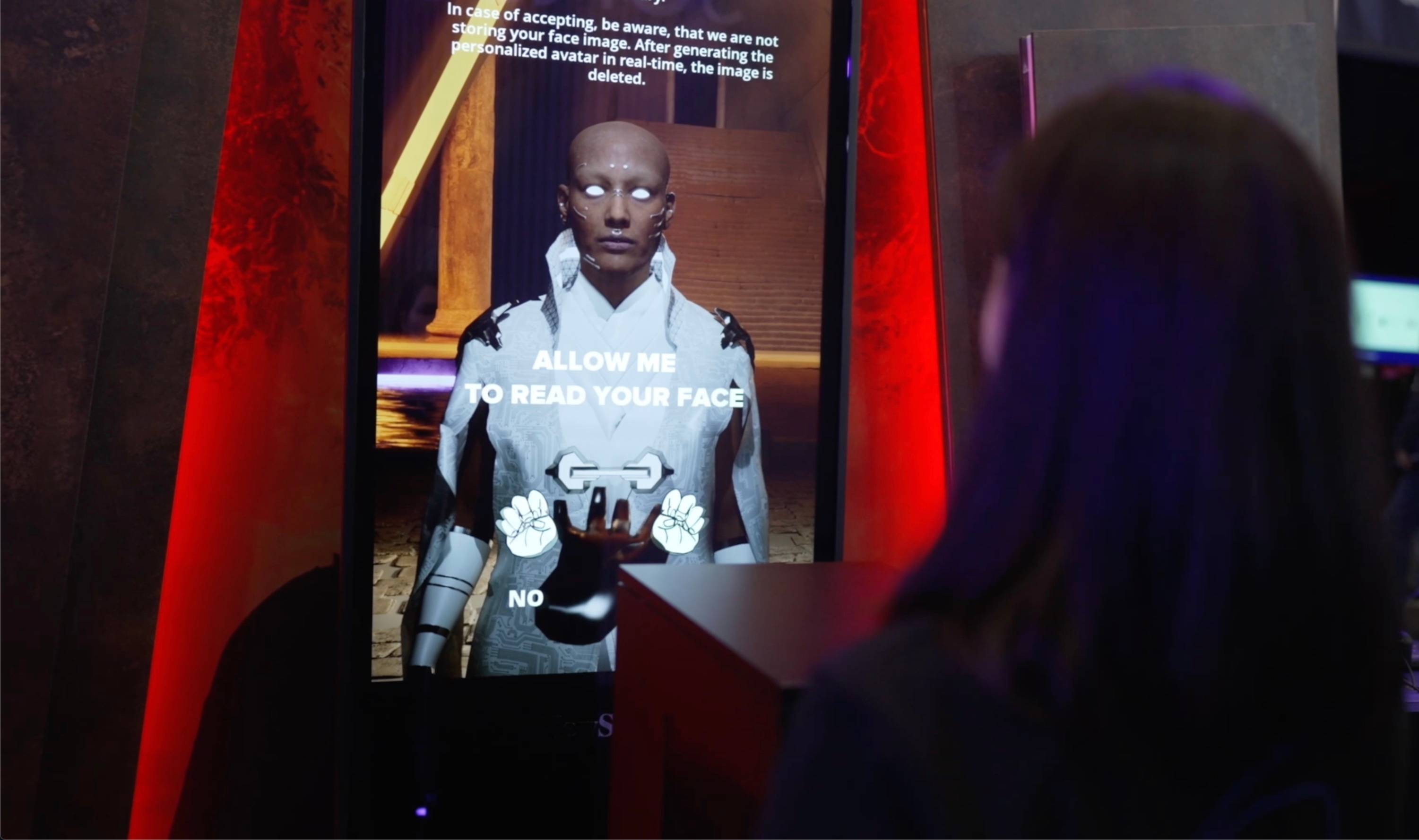
As a result, I proposed a concept of the following multimodal experience: a visitor initiates the experience using haptic device (more in the article on DOU), an infrared camera reads hand movements and commences the face recognition with help of webcam and AI.
While a user interacts with the digital assistant, AI model generates a visitor’s futuristic picture along with the prediction of their future profession, and finally generates a NFT. During the interaction the guest feels different haptic effects. At the end, the visitors get their personalised ID card printed.
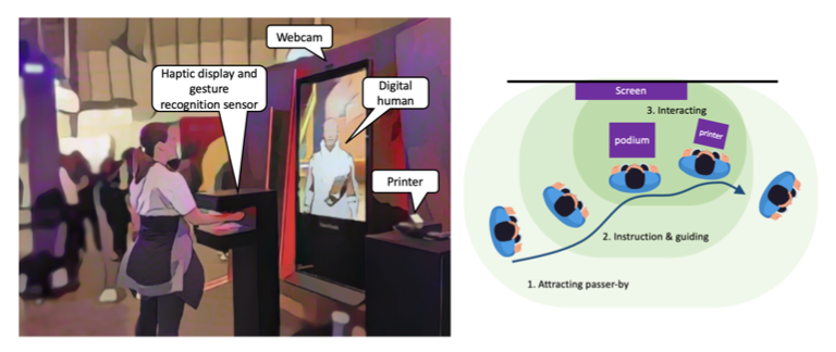
Besides the solution was created for the big prestigious conference, it also involved multiple technologies, including early versions of generative AI. That’s why it was crucial to treat the development responsibly, as the company’s reputation was at stake.
In 2022 Responsible AI procedures were rather informal and only the step fourth was strictly defined and mandatory for all types of initiatives. Thus, some steps were executed intuitively and were guided by common sense. Below I will share the process and some examples valid for each stage.
Step 1. Concept evaluation
On the step of concept evaluation a cross-functional group was assembled which included specialists from brand marketing, PR & communications and myself, R&D Product Manager. Within Responsible AI framework we assessed ethical and repetitional aspects by answering below questions:
Is “fortune-teller” experience reasonable? Is it ethical?
Does the solution have its weaknesses: technical, psychological, regulatory?
The most fierce discussion took place around the first question. It turned out that many people might have superstitions about any kind of predictions, or have some religious cautions, even if it is just a game. Only because of this concern, the solution could have land in a trash bin.
To overcome doubts, the idea was presented to a wider group of marketing specialists, including C-level ones. Also the geography of the representatives was extended. The team taking part in the discussion represented Europe and North America. It was important, as the solution was oriented to the international audience.
Finally, after assessment we decided to move forward with the idea. To mitigate the risks, it was decided that a company’s representative would notify each visitor about the experience before its start. So the guest would have the opportunity to refuse. And we had two or three such cases indeed.
Second question, apart of assessing each individual technology, covered assessment of personal data safety, privacy and model quality. We identified the risk that some visitors wouldn’t like the idea that their faces would be recognised by AI or would feel discomfort not knowing which of their data and how could be used by AI, how would it be stored and processed. Additional requirements came from GDPR.
Step 2. Concept redesign
Taking into account the above mentioned risks, the concept was updated. The solution was enriched by the alternative flow which allowed the visitor to refuse face recognition, but still having the opportunity to receive an immersive experience. In case of refusal, a random face was generated, but gender and race still had to match. So, the users had to grant their informed consent or refuse.
Having this input from the previous rounds of Responsible AI review, myself and the team of R&D engineers, data scientists, DevOps and UX gathered to find the answers to the below questions:
How to provide the visitors with the feeling of safety and security?
How to create an unambiguous AI model?
Addressing the first question we decided not to use any external services which might use photos of our visitors in nontransparent way, but to create and train our own GenAI model instead**. We also would not store photos neither online nor on any server, and its generation would happen real-time via cloud service.
On top of that, the information how AI generates images, which data is stored and used was added to the interface. This step was right before the moment when visitors explicitly granted their permission on face recognition. Also it was decided that we wouldn’t display the result of image generation on the big screen, so that other guests couldn’t see it. The result was printed and handed personally to the visitor.
Both technical solutions where compliant with GDPR and exhibition requirements.
Regarding the second question, we set dataset parameters, to avoid model bias: the same number of males and females, equally presented races and age groups of adults, and others.
Step 3. Evaluation on development stage
After the data scientist prepared the dataset of global celebrities and trained the model, the team met together with UX, marketing and the data scientist. As it was used supervised learning for a model, there was no problem with transparency or hallucinations, so the team evaluated it on the subject of bias and ethics.
I will not go into deep details of all iterations, but will share one example.
It turned out that often the results produced my the model were not aesthetically attractive and it was not good enough for a conference. It’s natural that everyone wants to look good. Therefore, we had to confront an ethical dilemma. To make visitors more attractive, the model should have been trained on “pretty” faces. Which meant to be deliberately bias. As human beautification, especially in a futuristic style, wouldn’t harm people, we collectively decided that the risk of such a bias is accounted and accepted.
Since each person has its own feeling of beauty, I had to manually regenerate the dataset using Midjourney**. Having a new dataset, the team reviewed each image and voted to select suitable ones. The model was retrained, retested and reevaluated by the team.
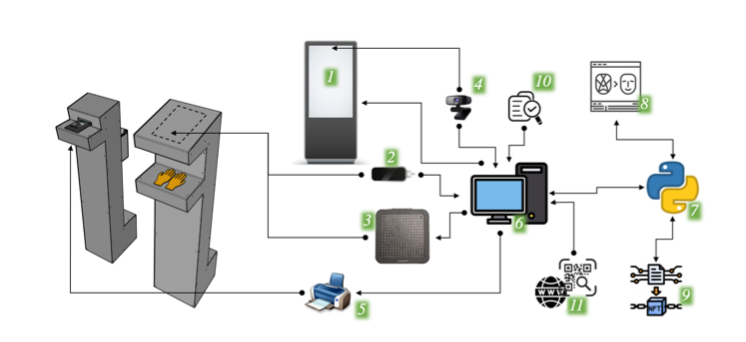
1 – kiosk with display, 2 – infrared camera, 3 – haptic device, 4 – web camera, 5 – printer, 6 – PC (application server with digital assistant, SDK for haptic and infrared camera), 7 – custom AI model on Python server, 8 – cloud where image is generated, 9 – minting NFT on blockchain, 10 – image generated on Python server, 11 – webpage with avatars gallery and NFT.
Step 4. Technical review
When solution development and testing were completed, the team of IT security, marketing specialists, lawyers, R&D developers, DevOps and myself (an owner of the product) evaluated the solution built.
I run live demo and presented the business case — what is the solution and what is its purpose. IT security specialists, who performed some technical tests, provided their guidelines for implementation. Lawyers checked if the solution is compliant with GDPR and company’s internal regulations and provided their recommendations.
Only when all recommendations were implemented, the solution received the approval for public use.
Conclusion
Responsible AI in practice consisted of the series of meetings of the cross-functional teams where we raised all types of concerns and risks, searched for collective response how to mitigate them, performed assessment of compliance with best practices of Responsible AI as company didn’t have its own corporate practices, and finally Go-no Go decision was made.
As it was the first and a bit spontaneous Responsible AI process, the key to success was involvement of a broad range of specialists. Also it helped a lot that the assessment sessions took place on each stage of development. It allowed to identify the risks and issues early and timely solve them.
Best practices
To understand how to create a formal and high-quality Responsible AI procedure, I have completed trainings provided by two technological giants. One of them which was at the origins of creation Responsible AI framework.
Thus, Amazon bases their materials on the model’s main problems (such as bias, lack of explainability, inaccuracy, toxicity and hallucinations, datasets creation etc.), provides simple recommendations on how to improve the model, declares and explains its governance principles in AI, as described on the scheme below, and finally suggests technical solutions of development which have to help with those principles’ automation.
For example, Bedrock service from Amazon has wide range of possibilities in building GenAI apps, ensuring privacy, security and Responsible AI. To identify bias in the models, AWS offers SageMarker AI Clarity service.
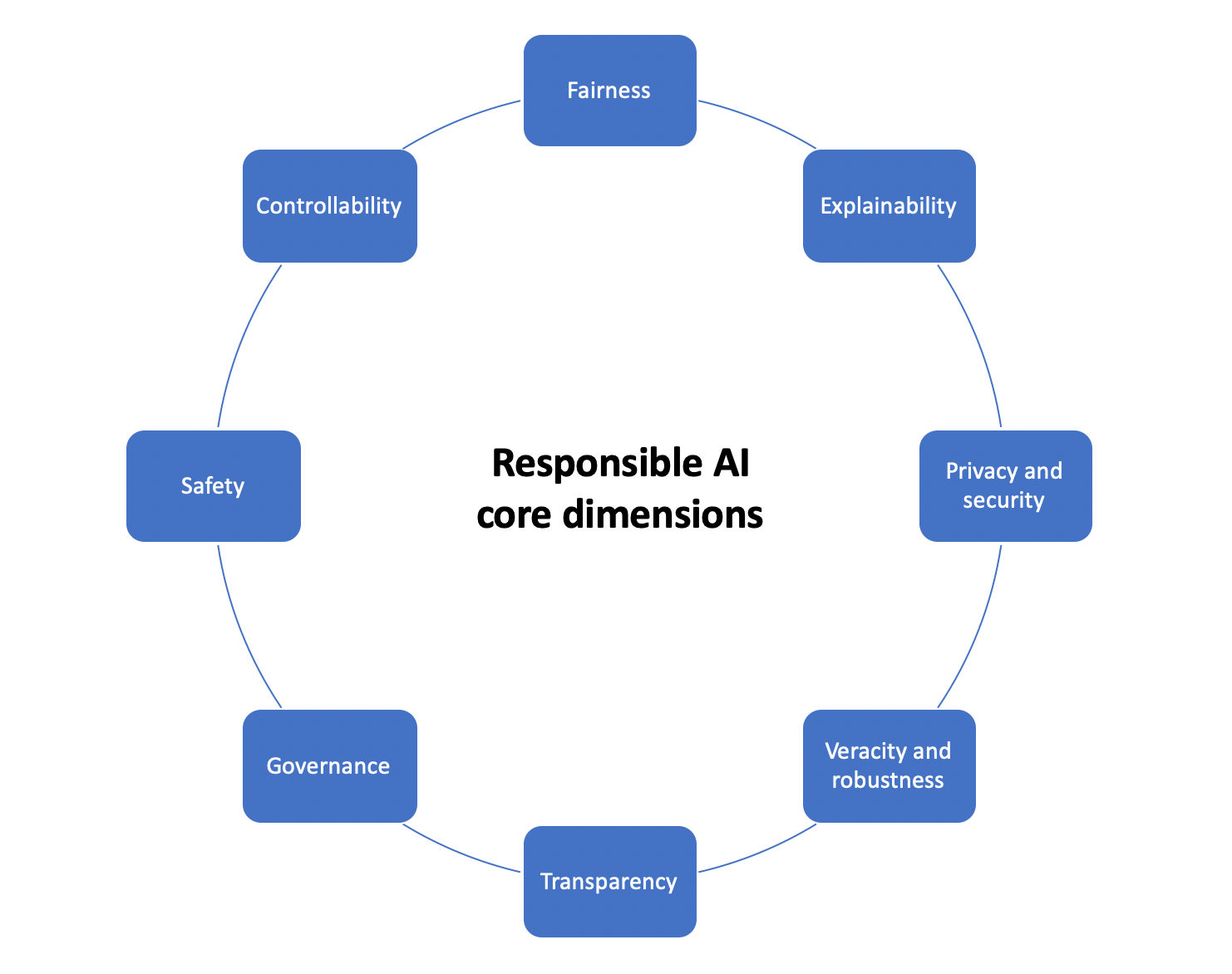
In general, it is a useful training to get familiar with products and technical solutions for Responsible AI by Amazon. But it doesn’t uncover how the company emedded the framework into the internal development processes.
On contrary, Google Cloud was very generous in this regard. Besides highlighting main challenges and problems with AI models, they also share a step by step methodology for Responsible AI.
Google began in 2017 by defining the company’s global mission as AI-first. The same year, when few people thought about such things, to support this mission “AI ethical regulations” were created which later developed into AI principles. Apart from the principles, the regulations contain target areas of AI application and the list of four directions which company wasn’t going to deal with. It was about such use cases as weapon or unauthorised people’s surveillance.
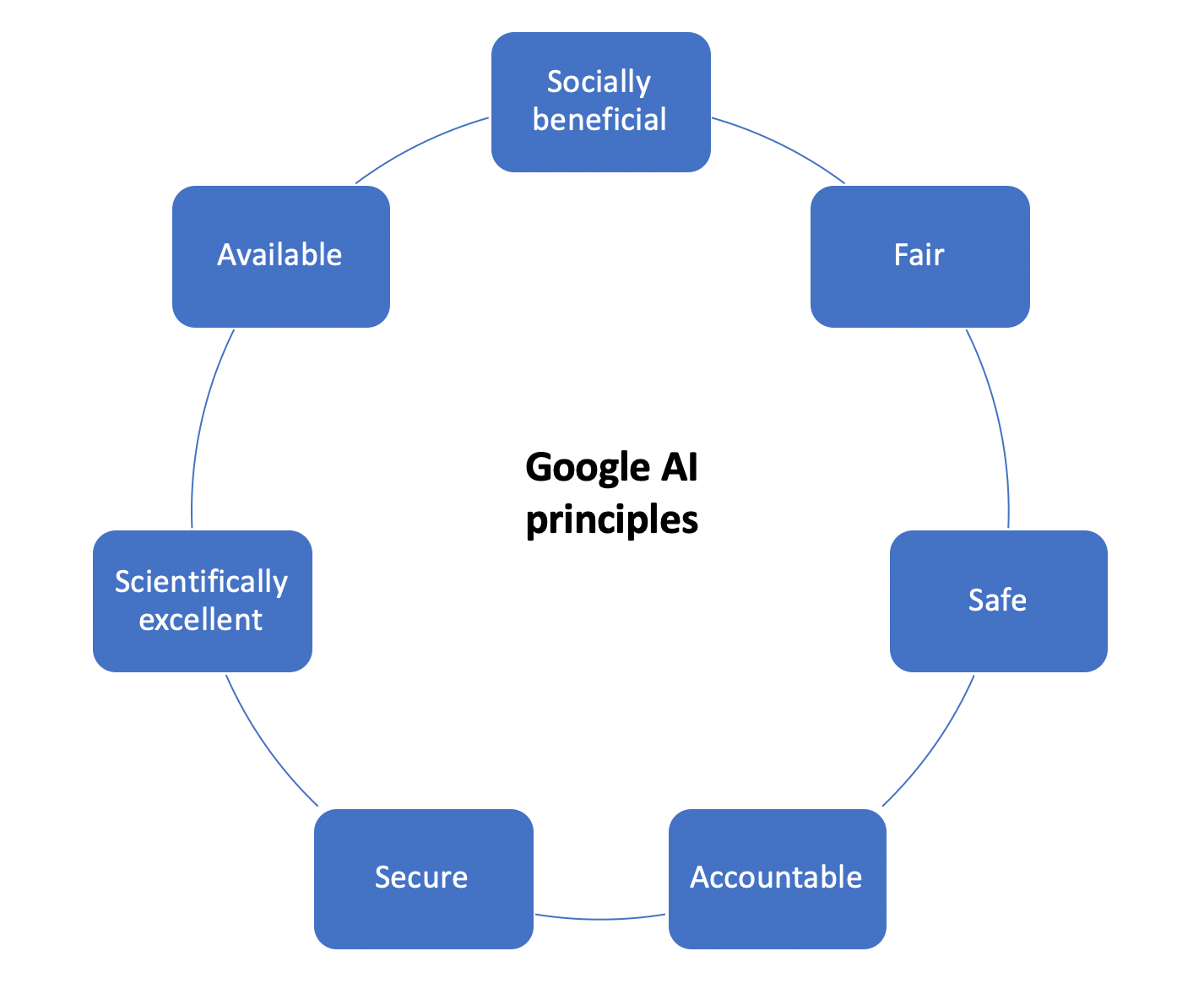
Based on AI principles Google developed the Responsible AI process which covers how to apply them in practice, how to make trade-offs in case of conflicting principles, how to manage risks. This process consists of the series of evaluations and checks (review). Although to solve some tasks technical solutions are used (for example, to test ML model performance), their approach is always focused on people. People provide data for model training, people test and people make final decisions.
Google created special committees which assesses if new projects, products and proposals or agreements are compliant with AI principles. The committee board consists of three main teams:
Responsible Innovation team consults other teams how to apply AI principles in order to follow the common vision and the same decision making process, as well as performs a preliminary assessment of initiatives. This team often includes user researcher, social scientists, specialists in field of ethics and human rights, private data protection professionals, lawyers etc.
Second team consists of experienced experts across different areas in Google which provide technological, functional and product expertise. This group is engaged in cases related to new technologies and consults on the stage of Responsible AI review.
Third team is the C-level board which work on the most complex and sophisticated questions, including those touching cross-product or cross-technology cases.
There are also a custom Review Committees created for separate products, use cases, technologies etc. And Google Cloud AI has its own team.
The main goal of review is to answer the below questions:
Is the proposed business case in conflict with AI principles?
If not, how to ensure that solution brings benefits and how to eliminate potential damage?
The process of client’s use case assessment includes the below steps:
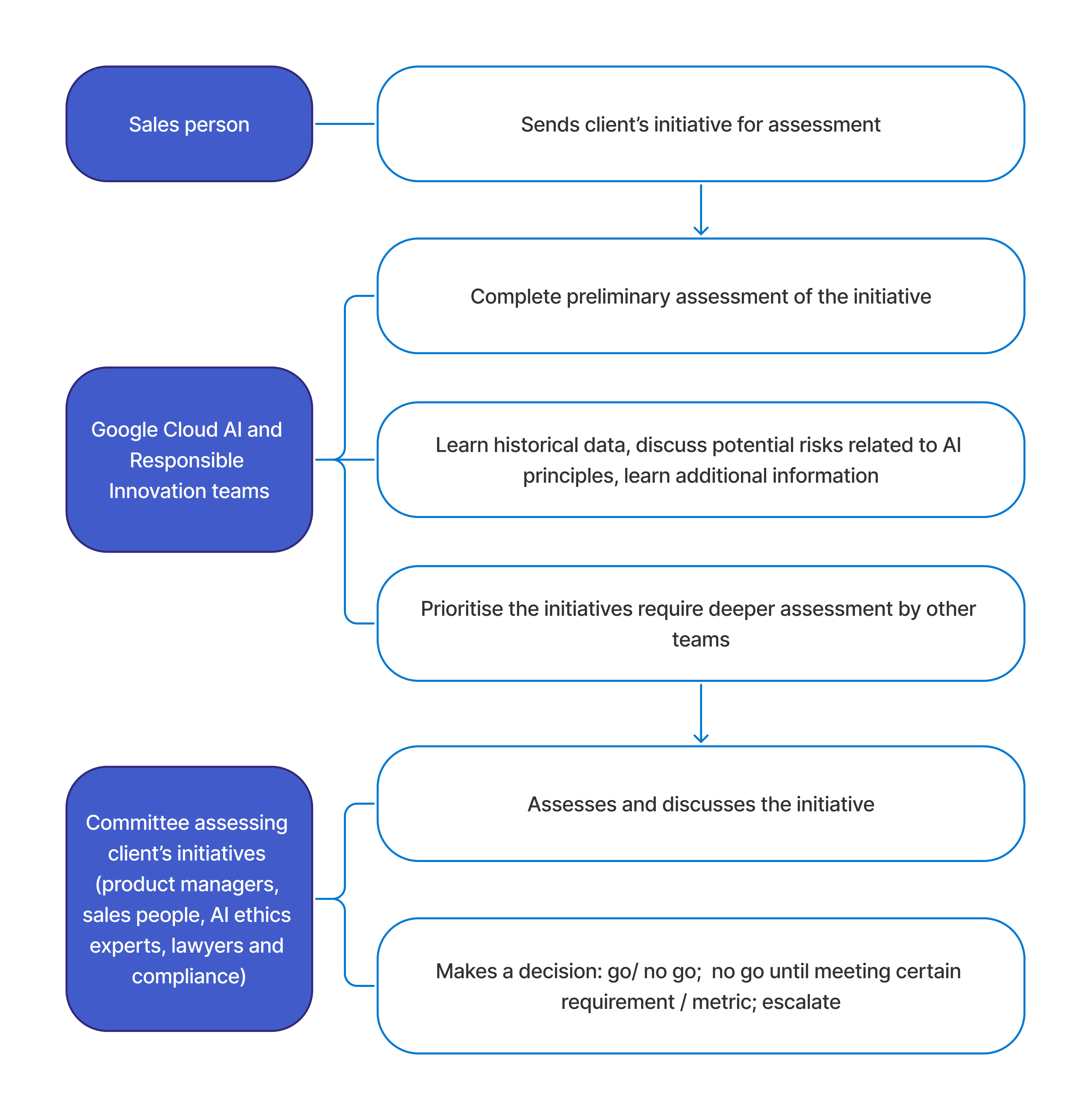
Decisions are made by consensus. If unambiguous decision isn’t possible to make, the Committee which assesses client’s initiative might escalate the case to top management board.
The process of in-house product assessment consists of the below steps:
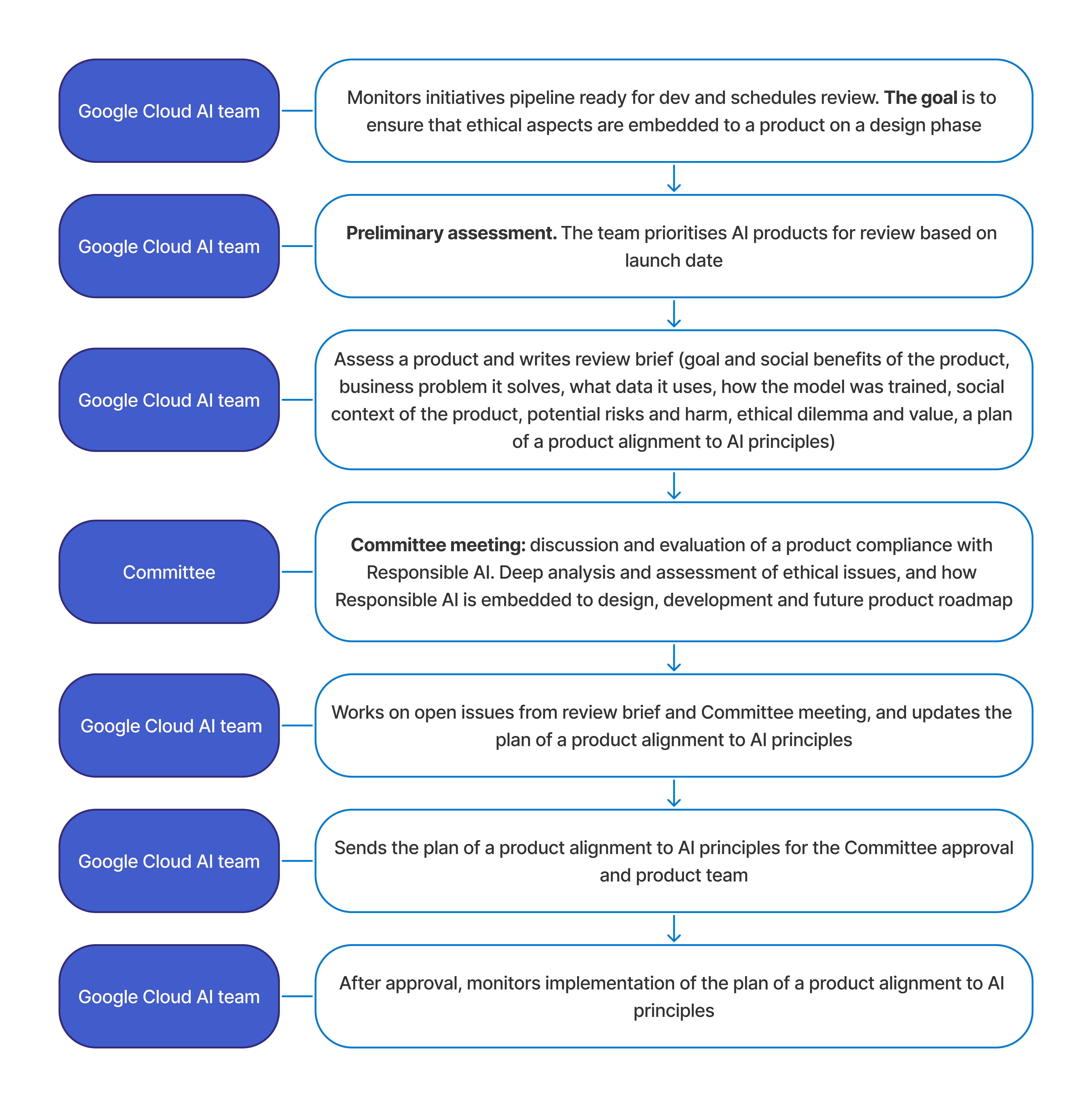
The monitoring if the product is compliant with AI principles takes place throughout the full development lifecycle. The training materials don’t contain explicit confirmation, but I can assume that client’s initiatives confirmed for development following the same process.
The analysed approaches of AWS and Google Cloud we can get an overall picture of what both companies mean by Responsible AI. We can observe that they share similar AI principles.
If we look at discrepancies of both approaches, it seems that AWS directs efforts to Responsible AI automation, while Google Cloud applies technical solutions to selected tasks, but to evaluate the result relies heavily on multilevel expert assessment. Also Google Cloud emphasises on AI products social benefits, or at least declares that.
Final thoughts
I am deeply convinced that in R&D and innovative environments it is crucial to embed Responsible AI approaches to AI solutions creation.
In R&D and highly-innovative environment there is a high level of uncertainty and ambiguity which brings in huge risks. Risks and challenges of AI initiative appear on different levels:
on technology level
on solution level
on solution application context level
To mitigate potential problems, one needs to analyse AI initiative on the above levels: each element individually, all components together, and finally from the big picture view.
In the above example of experimental innovation the team analysed and assessed each individual technology: computer vision, blockchain, cloud, haptic, and less developed: early digital assistant and early Generative AI (to remind we are talking about 2022; MidJourney came into the world in July 2022, GPTChat at the end of November 2022).
Not all of the technologies were AI driven, but we applied Responsible AI principles for them anyway. For instance, we evaluated the ethical dilemma of energy-consuming NFT or if the visitors would worry about the fact that haptic device could gather their biometric data from their palms.
Combining technologies into “digital fortune teller” was innovative and might bring some new risks. That’s why on the next stage the group of experts analysed and assessed the overall solution very carefully.
And, finally, on the big picture level (use case of immersive experience used in public space) the team evaluated nature of application, social context, potential users geography, demographics and much more.
On the example of case study we can see how many times the company might get into trouble if it didn’t apply Responsible AI approach. Thus, I encourage you to introduce these practices in your teams and companies. Besides avoiding unpleasant consequences this will strengthen trust in your AI solutions and to AI in general. To create your own framework you always might be inspired by the best practices, including those covered in my blog.
Remarks
*Based on training materials by AWS and Google Cloud on Coursera.
** In 2025 in a new version the custom model was replaced with a service.